
Explore the history, wildlife, mangrove forests, tourist attractions, best time to visit and essential travel information about the Sundarbans.
1. Introduction to Sundarbans
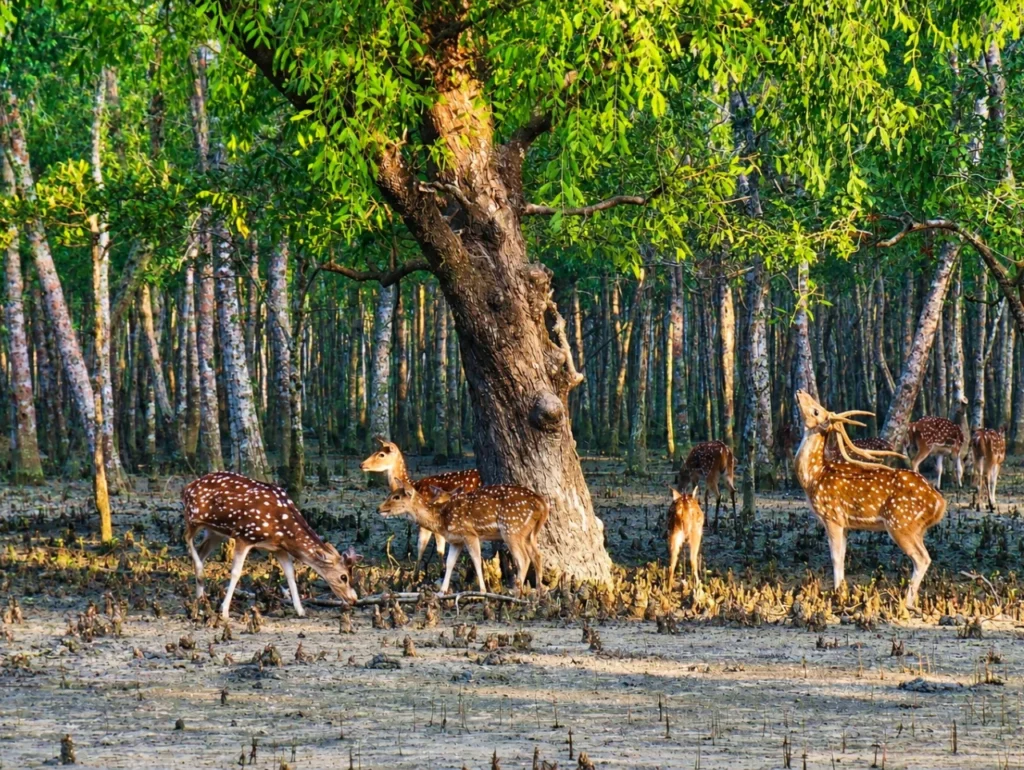
Introduction to Sundarbans, India The Sundarbans is one of the most extraordinary natural destinations in India, famous for its vast mangrove forests, winding rivers, rich biodiversity and the legendary Royal Bengal Tiger. Located in the southern part of West Bengal, the Indian Sundarbans form a major part of the world’s largest mangrove ecosystem spread across the Ganga-Brahmaputra-Meghna Delta. The word “Sundarbans” is believed to have originated from the Sundari tree (Heritiera fomes), a prominent mangrove species found in this region. The landscape is a unique combination of dense forests, tidal waterways, mudflats, islands and coastal villages, making it one of the most fascinating eco-tourism destinations in India.
2. Sundarbans Location & Geography
State: West Bengal
Districts: South 24 Parganas and North 24 Parganas
Region: Eastern India, Bay of Bengal Coast
The Sundarbans lies approximately 100 km away from Kolkata, making it one of the most popular weekend nature destinations from the city.
The region consists of hundreds of islands connected by rivers, creeks and tidal channels. Some islands are protected forests, while others are inhabited by local communities.
Area of Sundarbans in India
The Sundarbans region covers a huge area of approximately 9,630 square kilometres in India.
It includes:
Sundarbans Biosphere Reserve
Sundarbans National Park
Sundarbans Tiger Reserve
Wildlife sanctuaries
Buffer forests
Human settlements
The protected forest area is divided into different zones to balance wildlife conservation and sustainable tourism.
3. History of Sundarbans
Ancient History
The Sundarbans has been shaped by centuries of river movement and sediment deposition from the Ganga, Brahmaputra and Meghna rivers.
For thousands of years, the region remained covered with dense mangrove forests due to its difficult terrain, tidal movements and harsh environmental conditions.
Early communities depended on the rivers and forests for fishing, honey collection and natural resources.
British Period
During British rule, systematic surveys and forest management began in the Sundarbans.
The British administration classified large parts of the region as forest reserves to control timber resources and manage land.
However, human settlements expanded gradually as people cleared parts of the forest for agriculture and established villages.
Conservation History
Due to its exceptional biodiversity, the Sundarbans received increasing protection:
1973: Included under Project Tiger
1976: Declared a Wildlife Sanctuary
1984: Established as Sundarbans National Park
1987: Declared a UNESCO World Heritage Site
1989: Declared a Biosphere Reserve
Today, conservation efforts focus on protecting tigers, mangroves, marine biodiversity and local communities.
Geography and Landscape of Sundarbans
The Sundarbans is a delta ecosystem created by three major rivers:
Ganga
Brahmaputra
Meghna
The landscape includes:
Mangrove forests
Tidal rivers
Estuaries
Mudflats
Islands
Coastal wetlands
The unique feature of Sundarbans is the daily movement of tides. Twice every day, seawater enters and leaves the forest channels, creating a constantly changing environment.
4. Best Time to Visit Sundarbans
The best time to visit Sundarbans is:
October to March (Best Season)
Winter is considered the ideal season for Sundarbans tourism.
Why Visit During Winter?
Pleasant weather
Comfortable boat safari
Better wildlife viewing opportunities
Lower humidity
Excellent photography conditions
Migratory birds can be spotted
Best Months:
November to February are the most preferred months for tourists.
Sundarbans in Summer (April–June)
Summer months are hot and humid.
Temperature can rise significantly, but early morning boat rides can still be enjoyable.
Advantages:
Less tourist crowd
Good chances of seeing animals near water sources
Sundarbans During Monsoon (July–September)
The monsoon transforms Sundarbans into a beautiful green paradise.
However:
Heavy rainfall may affect boat movement
River currents become stronger
Wildlife sightings become difficult
Monsoon is suitable for travellers who enjoy nature, rain and peaceful surroundings.
5. Flora – Mangrove Forest
he Sundarbans is famous for its mangrove vegetation, which can survive in salty water conditions.
Major Plants and Trees Found in Sundarbans
Sundari Tree
The Sundari tree gives the Sundarbans its name.
It is one of the most important mangrove species and has adapted to saline coastal environments.
Gewa Tree
Gewa is commonly found throughout the mangrove ecosystem and supports biodiversity.
Goran
A dense mangrove plant that provides shelter for insects, birds and small animals.
Keora
Keora trees are important for coastal protection and provide food sources for wildlife.
Golpata (Nipa Palm)
This palm-like plant grows along waterways and is traditionally used by local communities.
Importance of Mangrove Forests
The mangrove forests of Sundarbans provide several ecological benefits:
Protect coastal villages from cyclones
Reduce coastal erosion
Provide breeding grounds for fish and marine life
Store carbon and help fight climate change
Maintain ecological balance
Wildlife of Sundarbans
The Sundarbans is one of India’s most important wildlife destinations.
Royal Bengal Tiger – The Pride of Sundarbans
The Royal Bengal Tiger is the most famous animal of Sundarbans.
Unlike tigers found in other forests, Sundarbans tigers have adapted to:
Salty water environments
Mangrove forests
Swimming across rivers
Tidal landscapes
Tiger sightings are rare because of the dense forest, but the possibility of spotting one makes Sundarbans safari exciting.
Mammals Found in Sundarbans
Important animals include:
Spotted Deer
One of the most commonly seen animals during boat safaris.
Fishing Cat
A rare wild cat adapted to hunting fish in wetlands.
Wild Boar
Found in forest areas.
Rhesus Monkey
Commonly seen near forest edges.
Otters
Important aquatic mammals found in river channels.
Birds of Sundarbans
Sundarbans is a paradise for bird lovers.
Common birds include:
Kingfishers
Herons
Egrets
Brahminy Kite
Sea Eagles
Storks
Sandpipers
Pelicans
During winter, several migratory birds visit the region.
Reptiles and Aquatic Animals
The Sundarbans ecosystem supports several reptiles:
Saltwater Crocodile
One of the largest reptiles found in coastal areas.
Olive Ridley Turtle
A protected marine turtle species.
Water Monitor Lizard
Common in wetland habitats.
Snakes
Species include:
King Cobra
Python
Rat Snake
Sundarbans National Park
The Sundarbans National Park is the core protected area of the Indian Sundarbans.
It is famous for:
Royal Bengal Tigers
Mangrove forests
Wildlife conservation
Boat safaris
Since the forest is a river-based ecosystem, visitors explore the park mainly through boats.
Sundarbans Tiger Reserve
The Sundarbans Tiger Reserve was created under Project Tiger to protect the endangered Royal Bengal Tiger population.
The reserve includes:
Core forest areas
Buffer zones
River channels
Mangrove habitats
It is one of the few places in the world where tigers live in a mangrove environment.
Sundarbans Safari Experience
Unlike traditional wildlife parks, Sundarbans offers a unique boat safari experience.
Visitors travel through:
Narrow creeks
River channels
Mangrove forests
During safari, tourists can observe:
Birds
Deer
Crocodiles
Monkeys
Mangrove landscapes
Tiger footprints and signs
Popular Tourist Places in Sundarbans
Sajnekhali Wildlife Sanctuary
The main tourism centre of Sundarbans.
Highlights:
Interpretation centre
Watch tower
Bird watching
Sudhanyakhali Watch Tower
One of the most popular watch towers.
Famous for:
Deer sightings
Bird watching
Tiger monitoring area
Dobanki Canopy Walk
A unique elevated walkway through mangrove forests.
Visitors can experience the forest from above.
Netidhopani Watch Tower
Known for:
Forest views
Historical remains
Wildlife observation
Gosaba Island
An important inhabited island known for:
Local culture
History
Village life
Culture and Lifestyle of Sundarbans
The people of Sundarbans have a deep connection with nature.
Their lifestyle depends mainly on:
Fishing
Agriculture
Honey collection
Crab collection
Tourism
Bonbibi – The Forest Guardian
One of the most important cultural traditions of Sundarbans is the worship of Bonbibi, believed to protect people entering the forest.
Honey collectors and fishermen often pray to Bonbibi before entering dangerous forest areas.
This tradition represents the relationship between humans and nature.
Food Culture of Sundarbans
The cuisine reflects traditional Bengali coastal food.
Popular dishes include:
Fish curry
Hilsa preparations
Prawn curry
Crab dishes
Rice-based meals
Bengali sweets
Climate and Environmental Challenges
Sundarbans faces several environmental challenges:
Cyclones
The region frequently experiences powerful cyclones from the Bay of Bengal.
Rising Sea Levels
Climate change threatens many islands due to increasing sea levels.
Soil Erosion
River erosion causes loss of land and affects villages.
Increasing Salinity
Saltwater intrusion affects agriculture and freshwater availability.
How to Reach Sundarbans from Kolkata
By Road
Kolkata → Godkhali
Distance: Approximately 100–120 km
From Godkhali, visitors take boats to enter Sundarbans.
By Train
Nearest railway stations:
Canning Railway Station
Sealdah Railway Station (from Kolkata)
Canning is the gateway to Sundarbans tourism.
By Boat
Boat rides are the main mode of transportation inside Sundarbans.
Things to Do in Sundarbans
Wildlife boat safari
Visit watch towers
Bird watching
Photography
Village tours
Experience local culture
Explore mangrove forests
Enjoy river cruises
Taste traditional Bengali seafood
Why Sundarbans Should Be on Your Travel List
The Sundarbans is more than a wildlife destination. It is a place where nature demonstrates resilience and harmony.
A journey through Sundarbans offers:
The thrill of tiger territory
The beauty of mangrove forests
Unique river landscapes
Rich wildlife experiences
Cultural connection with local communities
Sundarbans is a rare destination where forests float on water, rivers shape life, and every journey reveals the incredible power of nature.